
Learning as a Shared Practice
Franco Bacchelli and I Encounter a Hebrew Manuscript in Parma

In my last dispatch I explored how complementary botanical metaphors in ancient traditions framed my winter season. I’d like to continue that theme, but share something more personal: an experience I had last month in Italy with Franco Bacchelli, my friend, teacher, and mentor who exemplifies scholarship and sociability in tandem.
I visited him for a week at his home in Bologna during my winter break. One evening at dinner, he asked me if I knew that Immanuel of Rome, the thirteenth-century Jewish poet, wrote a commentary in Hebrew on the entire Pentateuch (the Five Books of Moses), as well as several other biblical books. I didn’t. “The manuscript is in Parma,” he continued, “and I don’t think it’s been studied very much.”
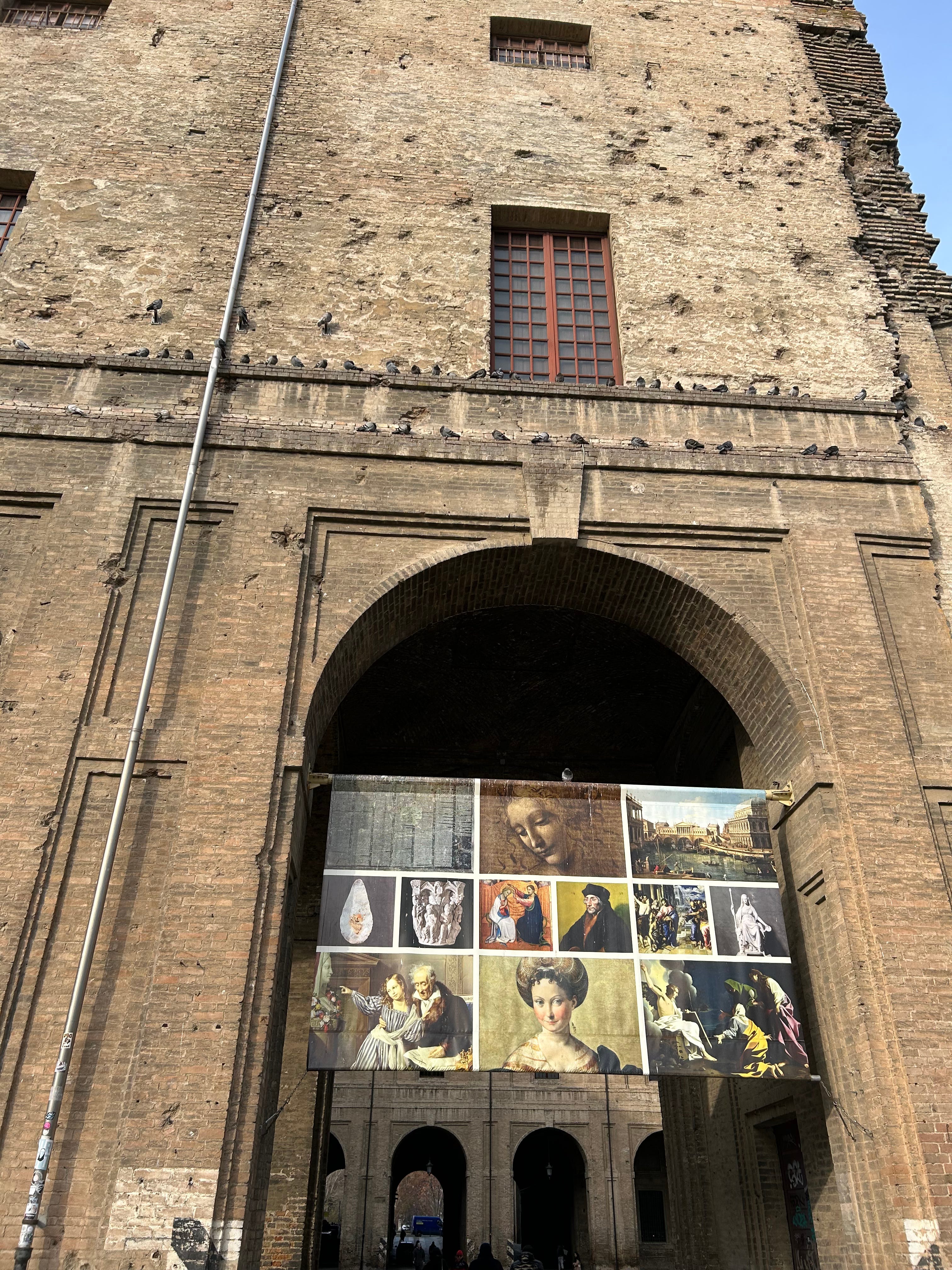
I was immediately intrigued, and the very next day we travelled to Parma to study this Hebrew manuscript together. On old bikes we journeyed through Bologna’s medieval streets, arrived at the train station, and rode straight to the platform— my seventy-year old friend lumbering into the train car, a Falstafian figure in an oversized corduroy sports coat, red scarf billowing behind him. In Parma we rode our bikes off the platform, through the station, and towards the Biblioteca Palatina.
The real education began when we sat down in the library’s manuscript reading room. I’ll admit that I was nervous. I had been there years ago when I was conducting dissertation research. But I had been alone. If I couldn’t decipher a manuscript, it was my own shortcoming— there was no witness. But now the stakes were higher: I was with one of the people whose minds I respect most on this earth. Perhaps more importantly, his deeds exceed his knowledge: he is a consummate host, and his mentorship is even more generous.
I would have been mortified if we had come all the way to Parma for nought: I didn’t want my friend to think our trip was in vain. I wanted to discover something about this manuscript. A clue to Immanuel’s friendship with Dante. New evidence about the Jewish appropriation and deployment of Aristotelianism. A different perspective on how a poet understands Scripture.
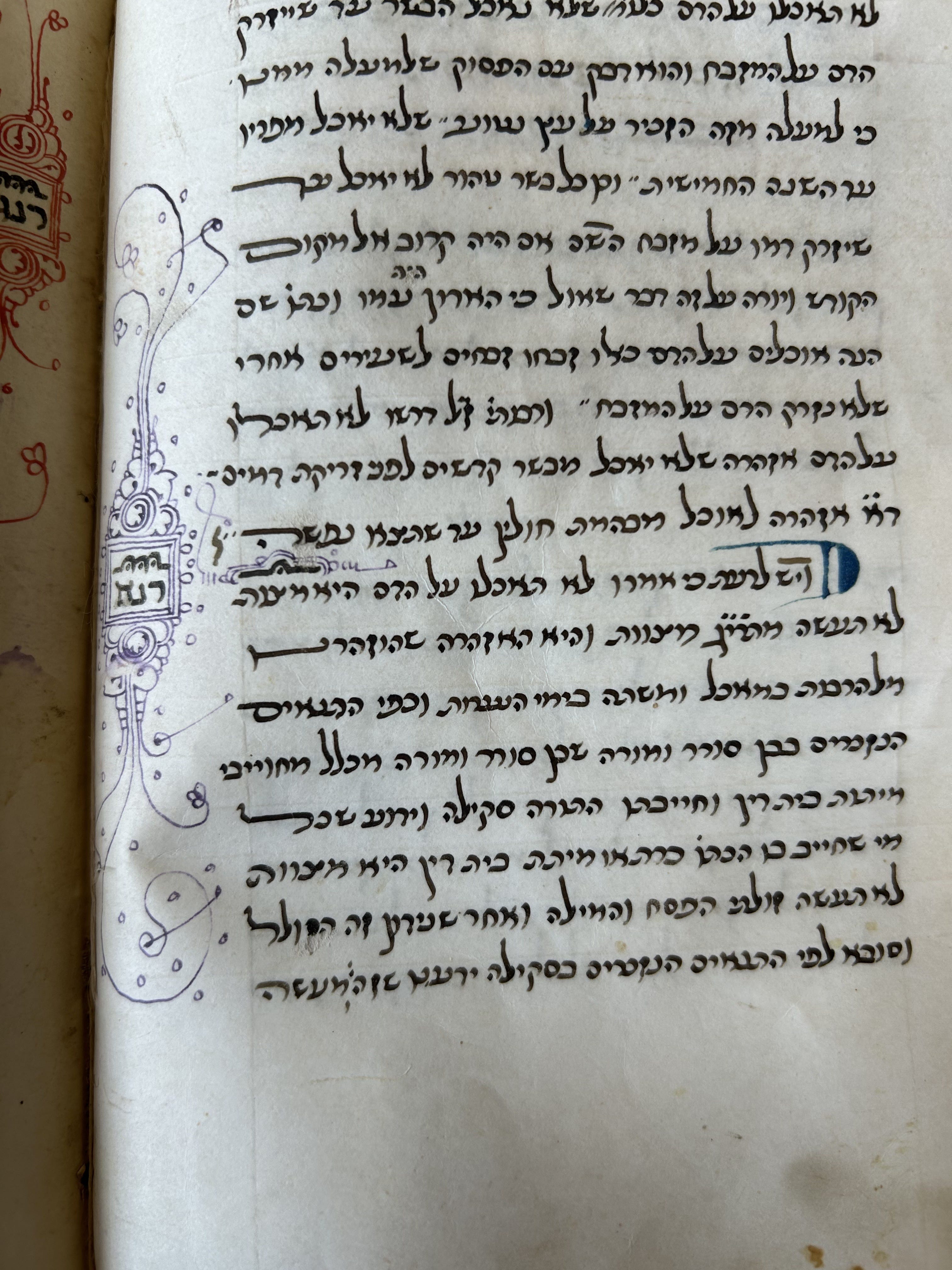
Franco, for his part, was calm and unconcerned. A cart appeared, groaning under the weight of five folio-sized manuscript volumes of Immanuel’s Bible commentary. I started with Genesis, as one does. I was immediately struck by the beauty of the physical object I held in my hands: bound in leather, the manuscript is written on elegant parchment that has been meticulously pricked, lined, and written in an exquisite fifteenth-century Italian-Jewish hand.
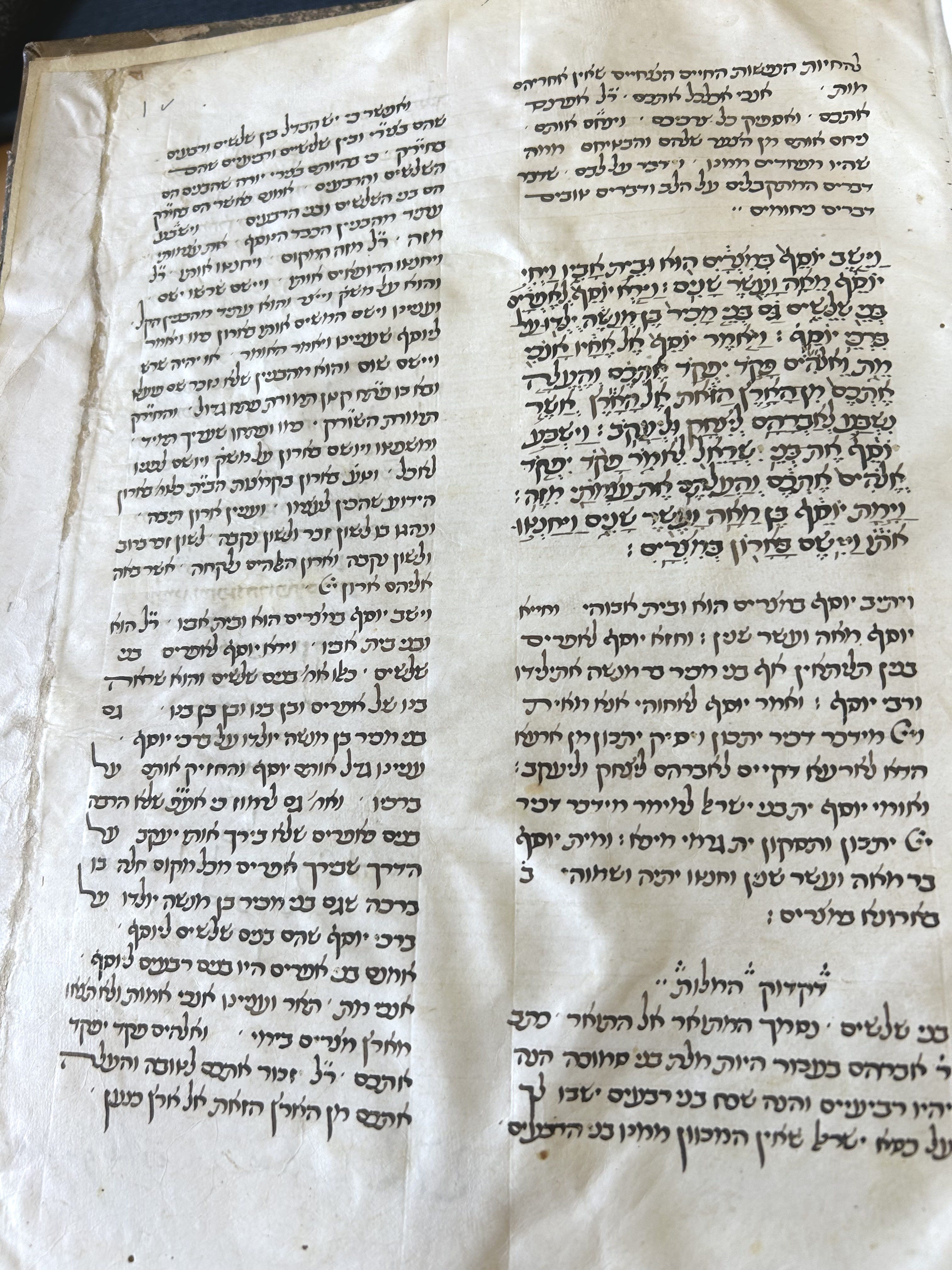
But such aesthetic considerations are secondary to Franco. While I rubbed my eyes in disbelief, he started asking me questions. “What does he say about Adamic language? Natural or conventional? A friend of Dante’s would have a position on this issue.” This simple question sent me leafing through this unfamiliar manuscript to find where Immanuel discusses Genesis 2, when Adam names all the creatures and plants in the world. “What terms is he using?”
I then had the challenge of engaging in several levels of simultaneous translation: I had to decipher the Hebrew handwriting in front of me, which I had never seen before. Then I had to understand what Immanuel was saying. Next I had to translate into Italian so I could talk to Franco about what I was noticing. This all took place in a totally analog fashion— the reading room did have wireless, but Franco, who does not own a smartphone, would have had no patience for me fumbling with passwords and googling things.
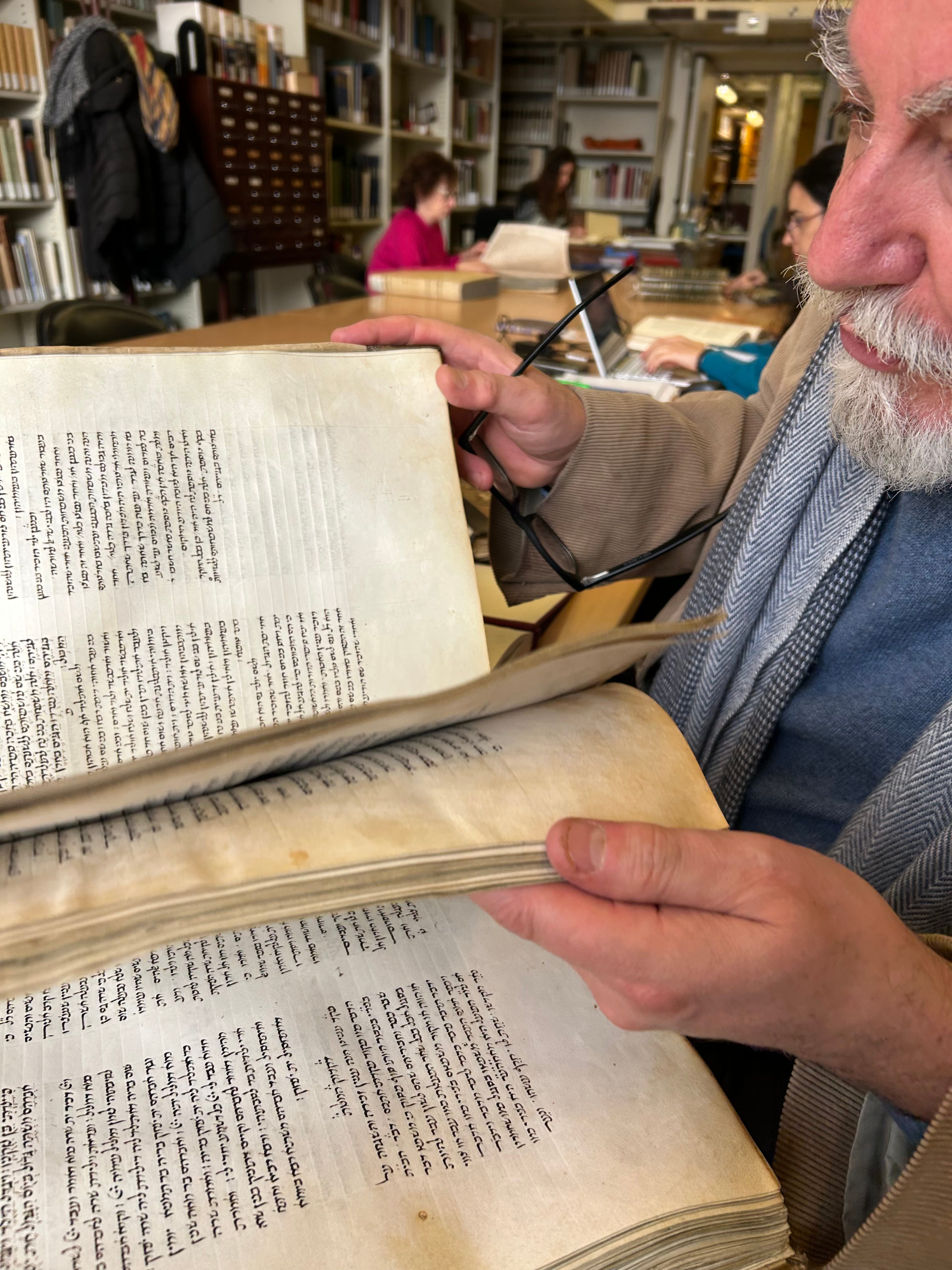
We spent a delightful few hours together in this fashion. And as I immersed myself in the manuscript, reading became a social activity— and much more powerful for that. Several times Franco frowned good-naturedly when I’d translate something imprecisely, or not immediately understand that what Immanuel had written was deeply rooted in the tradition of Aristotle’s poetics, or Augustine’s theology. “Keep going,” he’d say: “we need to know more.” Once he even urged me to exert myself and concentrate: “tell me more exactly what he’s saying there.” As I hunched over the manuscript, catching whiffs of delicious-smelling coffee from the street below, swirling with the pleasant scent of a book written on animal skin (that’s what parchment is, after all), I heard and felt different presences.
The scribe was pleased with his handiwork. Past readers whispered about the delights of holding this gorgeous manuscript. And at the risk of sounding corny, I thought I heard Immanuel himself, calling out to me across centuries. Friends of mine who have devoted their professional lives to studying manuscript culture have reported similar moments; I know I’m not alone. A Jewish poet who died eight hundred years ago was pleased that someone was reading him, and was encouraging me.
That feeling was much more palpable working with a handwritten text. If printed books, reproduced mechanically, place boundaries between author and reader, screens erect even higher ones. Manuscripts, in my experience, are far more vivid. Human hands create them, and those hands had to prepare a stylus, cut a nib, mix ink, and scratch out those beautiful Hebrew words. The distance between me and the past collapsed in this socially mediated space. In front of my teacher and friend, and sensitive to the spirit of Immanuel across the ages, the Italian-Jewish tradition lit up.
My first manuscript encounter with Immanuel of Rome will be forever linked to Franco Bacchelli. So much of scholarship is produced in isolation— perforce. For most people I know, research and writing require silence, solitude, and focus. But for me, and for others I know, human beings animate old ideas. I recall my beloved Talmud teacher Sol Cohen obm once saying to me on a quiet day when we were alone in the Katz Center at Penn “I miss the bet midrash [traditional Jewish study hall]. I miss the exchange, the give and take.” Sol was not a man given to nostalgic reminiscences, which made that confession even more powerful.
Thank you, Franco, for turning the Biblioteca Palatina into a sort of bet midrash.
Based. To me, this felt more like a defense of learning and interpretation as a living tradition, not a nostalgic one. Maybe it’s just the synesthesia, but I noticed the resplendence in the manuscript as well. Kudos🏛️
I love the way you described a kind of conversation with the long dead author of the parchment, as he called to you through layers of time. I’ve often tried to wrap my mind around the strange immortality we can achieve through written language, or now through film and recorded music or voice. Somehow the body of someone can be long vanished into dust but you can still feel a kind of interaction with them in real time. Thanks for bringing us into that conversation beside you and Franco.