
Plant a Sapling
Nature and Redemption in Judaism and Islam

Of all the places for Jewish and Islamic thought to converge, a rock and gem shop in rural North Carolina is one of the least likely.
I was in Hendersonville, NC last weekend visiting Congregation Agudas Israel, where I gave a presentation about Judaism and ecology. An hour before, Mara, my mother and I were perusing brightly colored stones and various bric a brac at the Elijah Mountain Gem Mine.
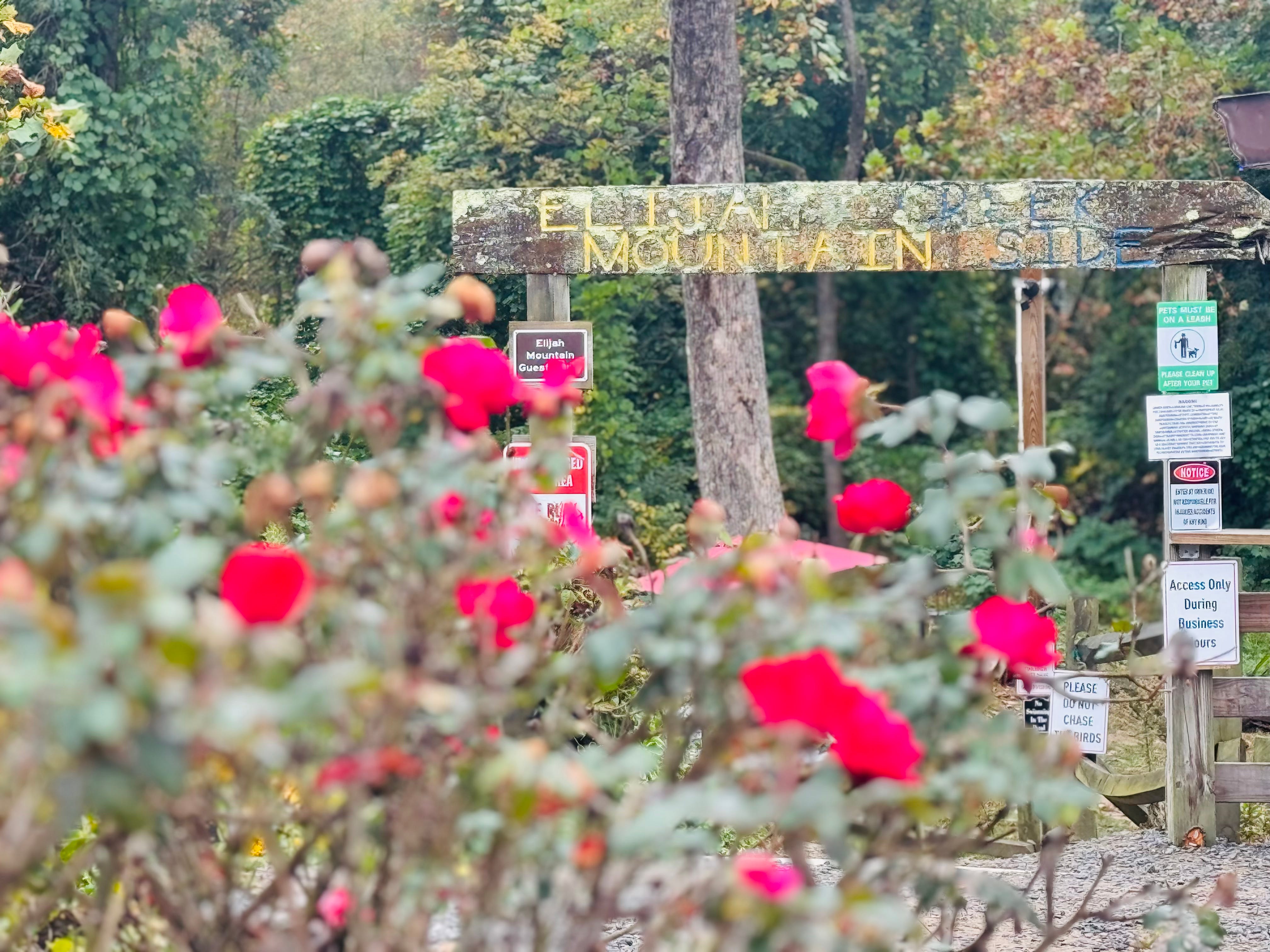
Mara and I were discussing my talk, and I showed her the source sheet I planned to distribute in synagogue. One of the midrashic texts (Avot d’Rabbi Natan) caught her eye:
“Rabbi Yohanan ben Zakkai used to say: if you have a sapling in your hand, and someone should say to you that the messiah has come, stay and complete the planting, and then go to greet the messiah.”
Her eyes flashing recognition, she asked “do you remember the Muslim parallel to this, the one Taimoor told us about during our last dinner on the porch?” Sadly I did not. But I called him immediately, and huddling under the eaves of the museum to protect myself and the source sheet from the October drizzle, I read him the passage. He immediately knew what Mara was talking about, and recited to me the following:
“If the apocalypse is established upon one of you, and he has in his hand a sapling, then let him plant it.” (Musnad Ahmad 12491)
The parallelism is striking. The Hebrew text speaks of the messiah; the Arabic of an apocalypse. But the common ground is firm: no matter the world-historical event, or the theological stakes, plants take precedence. And humans have a sacred duty to be stewards of the earth.
In fact, some rabbinic texts make the analogy between plant and human explicit. The Hebrew word for sapling, neti‘ah, can refer to humans as well. In a gorgeous Talmudic parable, one rabbi blesses another by analogy to a tree, saying (both to a tree and to his colleague) “may it be God’s will that all the saplings they plant from you be like you.” Ancient traditions like Judaism and Islam often connect us to the natural world; modern life, sadly, can sever us from it. Perhaps the moral of Rabbi Yohanan ben Zakkai’s remark about the sapling and the messiah is that stewarding the environment is intrinsically related to taking care of each other, and both are preconditions for salvation.
I was also fortunate to witness a different kind of stewardship in action last weekend. We attended the bi-annual Leaf Festival, on the site of the former Black Mountain College. Leaf refers not to the chlorophyll-processing part of a plant, but is an acronym for “Lake Eden Arts Festival.”
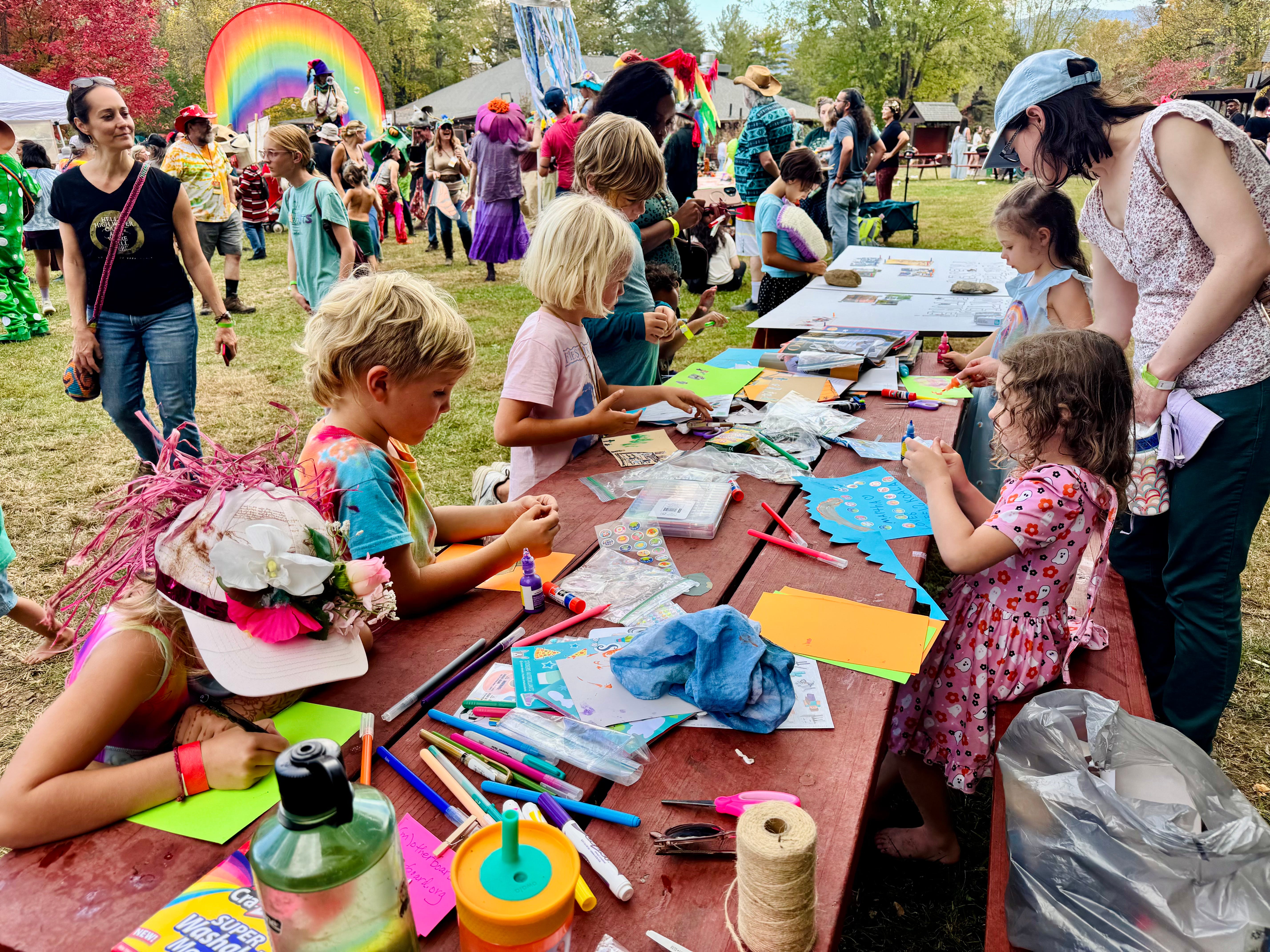
Children of various ages played without adult supervision; musicians saranaded; dancers stomped and twirled their way through contra dances; jam sessions broke out everywhere. Artists hawked their canvases, tinctures, and flutes made of animal bones. And an organization Mara co-founded, (M)otherboard, brought supplies for children to make collages. I can’t remember the last time I saw fewer cell phones in use. It was an inspiring display, and this paragraph can barely capture the diversity and creative energy pulsating from the shores of Lake Eden.
Neither Rabbi Yohanan ben Zakkai nor the author of the hadith Taimoor read to me could have envisioned this scene, where many saplings of friendship, music, and art were planted. But I do think these ancient Jewish and Muslim thinkers would have approved: all of these activities could, in their own modest way, hasten the coming of the messiah. A possible meaning of this passage is that redemption isn’t necessarily in the future, nor even about us; even when the redeemer arrives, we’re told to plant for posterity.
It’s easy to feel depressed about Jewish-Muslim relations these days. I take solace in the knowledge that these two faiths, siblings for a millennium and a half, share more than just history, their two cognate languages (Hebrew and Arabic), and similar traditions. They have a shared spiritual DNA. No doubt scholars of religious studies and intellectual historians (yes, I’m one of those) have their theories as to how one of those two sayings about the sapling might have been borrowed from the other. I prefer to think that deep in the soil of Abrahamic religions there’s some rhizomatic network, some fertilizing agent, that causes the fruiting bodies visible above ground to resemble one another.
If paradise is a garden after all, much can be learnt about how traditions treat those Edens.
When my daughter was bat mitzvah many years ago it was the custom to give gifts to all the guests. Because of her haftorah subject, we gave each guest a small tree to be planted in their yards/ gardens. They were great success and I always felt they were a better gift than a tee shirt or hat.
Beautiful Andrew! And Marlene, I share my brother's enthusiasm about your wonderful bat mitzvah gifts. We've long gifted willow saplings to the couples who've married on the ranch we run. These saplings are the descendants of a decadent "mother" weeping willow in the yard. Also Professor Berns, I love your ending rhizomal metaphor with regard to Abrahamic religions. Such a pleasure to read your thoughts. Thank you for sharing them with us all.